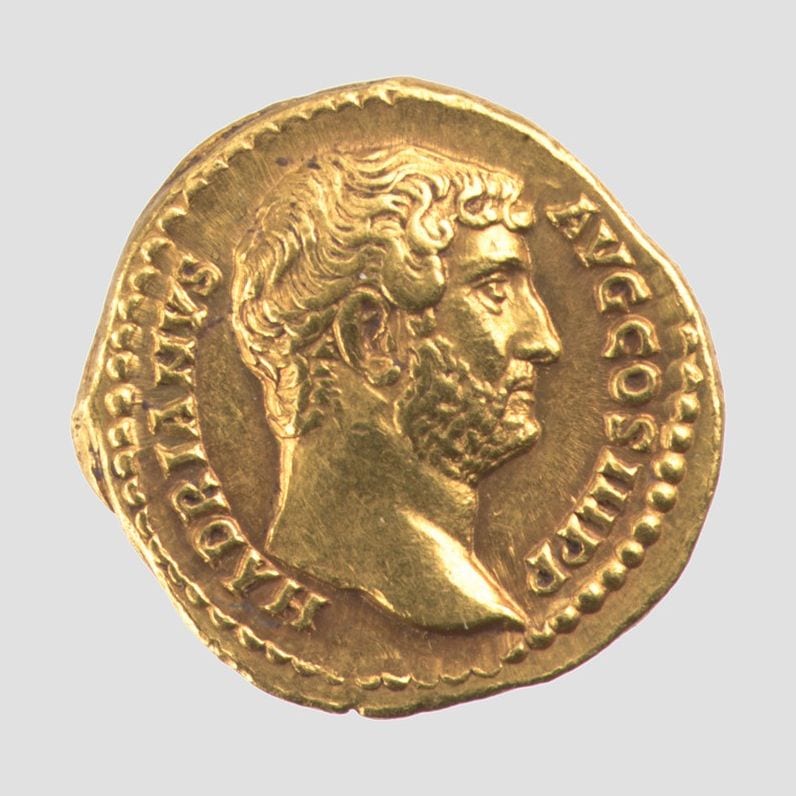
When a painting leaves a museum on loan, it travels with a document. Before it goes, someone records the state of its paint, its ground, its varnish, its canvas or panel, its stretcher and its frame. The record is checked during the loan and again when the painting comes home, so that any new crack or scuff can be spotted and accounted for. When a coin changes hands among collectors, it often travels with something much shorter: a short abbreviation and a number between 1 and 70, sealed into a plastic holder with the coin.
Both are descriptions of condition. They answer different questions, and the gap between them says a good deal about how the art world and the coin world think about objects.
What a condition report is for
The Canadian Conservation Institute treats condition reports as a basic tool of collection management. Their purpose is to let an institution follow changes in an object over time and step in with preventive care or treatment when needed. They also inform decisions about acquisition, lending, display and conservation priorities.
The institute lists the moments when a report is made. One is written at acquisition, as a baseline. Others come during routine checks in storage, before and during display, before treatment, and immediately after any damage. Loans call for a report before departure, during transit and on return, so that responsibility for any damage can be established.
For paintings, a baseline report works through the object layer by layer: the paint and how it was applied, the ground if there is one, the surface varnish, the primary support, whether canvas or a rigid panel, the auxiliary supports such as stretchers and strainers, and finally the frame and backing. The examiner looks first under ordinary light. Raking light, cast low across the surface, shows deformations in paint or canvas. Ultraviolet fluorescence and infrared photography can reveal how varnish was applied and expose underdrawing that ordinary light cannot. Damage is recorded in photographs, on marked overlays and in written description, using standard terms so that reports can be searched in a database.
The conservator’s obligations
Behind the report sits a professional code. The American Institute for Conservation, in its Code of Ethics and Guidelines for Practice, revised in August 1994, treats careful examination as the foundation for everything a conservator does. Before any intervention, the guidelines call for a thorough examination and appropriate records. Removing any material for sampling requires the owner’s or custodian’s consent. Claims about age, origin or authenticity should rest only on sound evidence.
The code is explicit that documentation is a duty, not an extra: “The conservation professional has an obligation to produce and maintain accurate, complete, and permanent records of examination, sampling, scientific investigation, and treatment.” It also asks that those records be kept in as permanent a form as possible, because they become part of the object’s history.
That last point is the heart of the matter. A condition report is cumulative. It does not sum up the object in a word. It lists what is there, where it is and what it looks like, so that the next examiner can compare. Its readers are registrars, couriers, conservators and curators, and its job is care and accountability.
A number for a cent
Coin grading began with a different problem. In 1949 Dr William Herbert Sheldon published a numerical system in his study of early American cents, presented as a quantitative scale for condition, as recorded by Numismatic News and in Harvey Stack’s history of grading for the Numismatic Bibliomania Society. Sheldon’s scale ran to 70. In the 1970s the American Numismatic Association updated and adapted it for all United States coins.
The association has published official grading standards since 1977. According to the ANA, the first edition was compiled by Abe Kosoff, with an introduction by Q. David Bowers and grading descriptions by Kenneth Bressett. The book is organised by coin type, because wear falls in different places on different designs.
The modern scale splits in two. Grades from 1 to 58 describe circulated coins. Grades from 60 to 70 are Mint State, for coins that never circulated. At the top, the ANA defines MS-70 as the perfect coin, with a sharp strike and original lustre of the highest quality for its date and mint. At MS-60, lustre may be dull or washed out and there may be many large contact marks. Lower down the circulated range, AU-58 shows only the barest trace of wear on the highest points. At F-12 the wear is moderate to considerable and even, yet the whole design remains bold and all the lettering can be read. At Poor-1, only the basic type of coin can be identified.
The ANA does not pretend the process is mechanical. In its own words, “grading is considered an art that requires years of experience to master.”
Third parties and the plastic slab
The second change came in the 1980s with independent grading services. Harvey Stack’s account and the overview on Wikipedia agree that the Professional Coin Grading Service was operating in 1986 and that the Numismatic Guaranty Corporation followed about a year later. Stack names Mark Salzberg and a group of East Coast dealers as the founders of the second firm.
These services grade a coin and then seal it in a tamper-resistant plastic holder, known to collectors as a slab. Sealing the coin and its grade together binds the judgement to the object, so the number cannot wander off and attach itself to another coin.
The grade did not stop being an opinion. Stack describes how competition between the two leading services produced what became known as the cracking out game. A collector unhappy with a grade could break the coin out of its holder and submit it to the other service in hope of a higher number. The result, in his account, was inflated population reports, since one coin could be counted more than once.
Two vocabularies
Set side by side, the two systems show their purposes. The condition report is open-ended. It can run to pages, it records every loss and retouching it can find, and it never assigns a score. Its value lies in detail that can be compared over time. The coin grade is closed. It reduces strike, lustre, wear and marks to one figure that can be read at a glance.
Part of the difference lies in the objects. Coins of one type share a single design, so it makes sense to rank them against one another, and the ANA’s type-by-type descriptions do exactly that. A painting has no sister copies made to the same pattern. Its condition can only be measured against its own earlier state, which is why the report, not the number, is the conservator’s tool.
Yet the two systems also meet. Both depend on trained eyes. Both rely on standard terms so that one examiner can be understood by another. And both admit, in their own documents, that judgement is involved: the conservator’s code ties claims to evidence, and the numismatist’s standards call grading an art. A grade is a compressed condition report. A condition report is a grade that refuses to round.
Sources
- Condition Reporting: Paintings. Part I: Introduction (CCI Notes 10/6), Canadian Conservation Institute, Government of Canada
- Code of Ethics and Guidelines for Practice, American Institute for Conservation
- Official Coin Grading Standards, American Numismatic Association
- The Sheldon Coin Grading Scale, Numismatic News
- The E-Sylum, Volume 24, Number 33: Harvey Stack on the history of grading, Numismatic Bibliomania Society
- Third-party grading, Wikipedia